

How to Troubleshoot Your Boiler in 3 Simple Steps
- tag25241
- Mar 4
- 5 min read

Waking up to a cold house is never a pleasant experience. When your boiler stops working, it can feel like a major crisis, especially on a frigid winter morning.
The good news is that not every boiler issue requires an emergency service call. Sometimes, a few simple checks can get your system back up and running.
This guide is designed to give you a straightforward, safe process for diagnosing your boiler. We'll walk you through a DIY boiler troubleshooting guide with three simple steps you can take before calling a professional.
These boiler troubleshooting tips will help you identify and possibly resolve minor issues while also teaching you when to stop and call for expert help.
A Quick Word on Safety
Before you touch anything, it's crucial to prioritize safety. Boilers use water, electricity, and often natural gas to heat your home. This combination can be dangerous if not handled correctly.
Never attempt to open up your boiler’s main casing or handle any internal components. If you smell gas, leave your home immediately, call your utility company, and a certified technician from a safe location. The following steps are external checks only.
Step 1: Check the Power and Thermostat
It may sound obvious, but many boiler "failures" are actually simple power or communication issues. Before assuming the worst, start with the basics.
Is the Boiler Receiving Power?
First, look at the boiler itself. Is there a display screen, and is it lit up? Are there any status lights on? If everything is dark, your boiler may not be getting power.
Check the Circuit Breaker: Go to your home's electrical panel and look for the circuit breaker labeled "Boiler" or "Furnace."
If it has been tripped to the 'OFF' position, try flipping it back to 'ON'. If it trips again immediately, do not reset it again. This indicates an electrical fault that requires professional attention.
Look for a Power Switch: Most boilers have an emergency shut-off switch located on or near the unit, which often looks like a standard light switch. Ensure this switch is in the 'ON' position. Sometimes it can be switched off by accident.
Is the Thermostat Communicating Correctly?
The thermostat is the brain of your heating system. If it's not sending the right signals, your boiler won't know to turn on.
Check the Settings: Make sure your thermostat is set to 'HEAT' and the temperature is set at least five degrees higher than the current room temperature.
Check the Batteries: If you have a digital thermostat, dead batteries are a common culprit for heating issues. Replace them if the screen is blank or showing a low battery warning.
If these checks restore your heat, you've just saved yourself a service call! If not, it’s time to move on to the next step.
Step 2: Check the Boiler’s Pressure and Water Levels
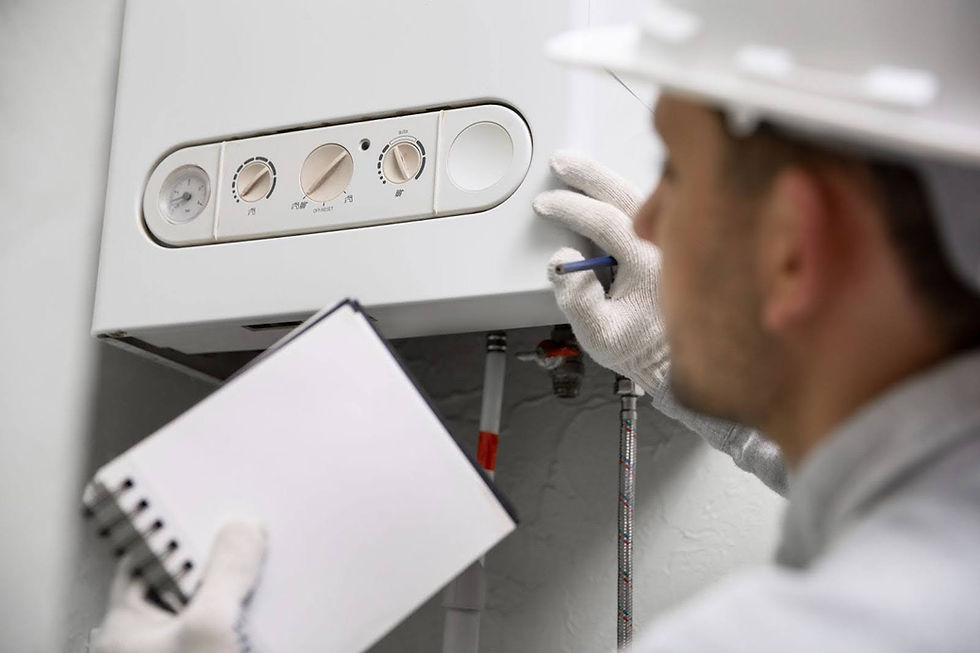
Boilers rely on a sealed system of hot water to heat your home. If the water pressure is too low or too high, the boiler will often shut down as a safety measure. This is one of the most common boiler problems and fixes that homeowners can safely address.
It’s worth noting that modern boilers have come a long way in terms of performance, some models can achieve efficiencies as high as 98.5%, which means nearly all the fuel you pay for is converted directly into useful heat.
Not only does this help keep your home cozy, but it can also dramatically reduce energy costs and emissions.
How to Check the Pressure Gauge
Locate the pressure gauge on the front of your boiler. It’s a small, round dial, often with green and red zones. For most residential boilers, the ideal pressure when the system is cold is between 1 and 1.5 bar. The green zone on the gauge typically indicates this range.
If the Pressure is Too Low (in the red zone): Your system may need to be re-pressurized. This usually involves using the boiler’s filling loop, a small, flexible hose with a valve at each end.
Your boiler's manual will provide specific instructions for doing this safely. If you’re not comfortable, this is a quick job for a professional.
If the Pressure is Too High (in the red zone): High pressure can be a sign of a more serious issue, such as a faulty component. You can sometimes lower the pressure by bleeding a radiator, but if the pressure keeps rising, it's time to call for help.
Checking the pressure is a key part of learning how to troubleshoot a boiler. If adjusting the pressure resolves the problem, make a note of it. A gradual loss of pressure over time is normal, but a sudden drop could signal a leak somewhere in the system.
Step 3: Reset the Boiler
If the power is on and the pressure is correct, but the boiler still isn't working, a simple reset can sometimes clear a temporary fault. Modern boilers have internal sensors that can trigger a "lockout" state if they detect a minor anomaly.
How to Safely Reset Your Boiler
Look for a "Reset" button or dial on the front of your boiler. It may be a prominent button or a small, recessed one that you need a pen to press.
Press the reset button once and hold it for a few seconds.
Listen for the boiler to kick on. You might hear a click, followed by the sound of the fan or pump starting up.
Only attempt to reset the boiler once. If it doesn't start, or if it starts and then quickly shuts down again, there is a persistent fault that needs professional diagnosis.
Continuously resetting the boiler can cause further damage. These quick boiler repair tips are for minor faults, not recurring problems.
When to Call a Professional
These simple boiler troubleshooting steps can resolve many common issues, but they can't fix everything. It is absolutely essential to call a certified technician if you experience any of the following:
You smell gas or suspect a carbon monoxide leak.
The boiler keeps tripping the circuit breaker.
You see water actively leaking from the boiler unit.
The boiler is making loud banging, gurgling, or whistling noises.
You have reset the boiler, and it still won't stay on.
You are not comfortable performing any of the steps above.
Why GJ Appliances Stands Out: Fast, Trusted, Local Help
When it comes to your home’s comfort, you deserve more than just a quick fix, you need service you can trust.
At GJ Appliances HVAC, we set ourselves apart with rapid response times, transparent pricing, and factory-trained technicians who treat your home with care. We don’t just solve problems, we help prevent them, offering expert advice for lasting peace of mind.
Don’t settle for guesswork or hidden fees. If it’s time to call in backup, choose Mesa County’s most reliable boiler experts.
Contact Us Today and let us get your heating back on track, so you can get back to what matters most!
Source:


Comments